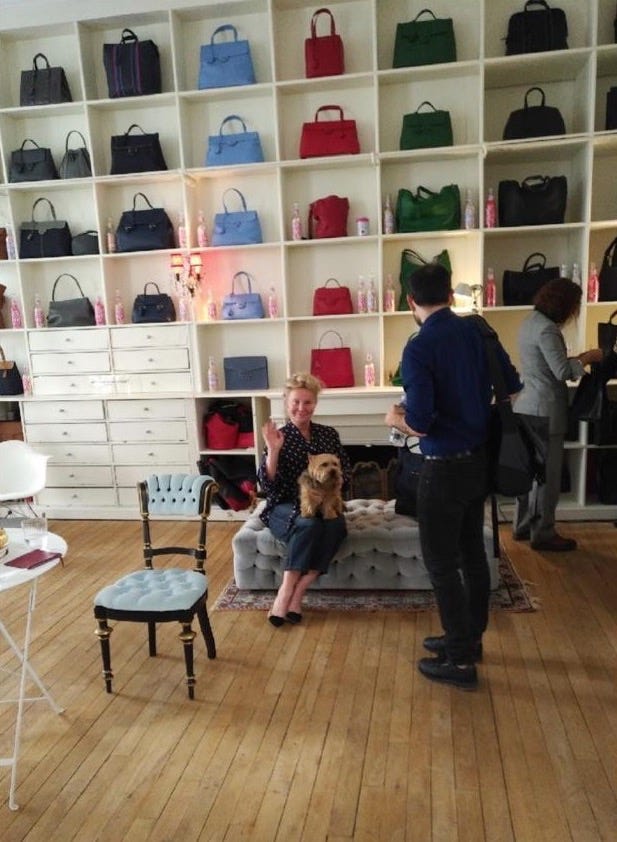
It all started on a train. While reading about Nina Ricci, I came across Myriam Schaefer’s name for the first time. Once I started digging, I couldn’t stop.
This article features images from Myriam Schaefer’s personal archive, including previously unpublished photographs shared with ROSKI YARD.
As my research continued, I recognised Nicolas Ghesquière’s role in Balenciaga’s story, but Schaefer’s name appeared only seldom. It immediately struck me as odd. How could the designer behind one of the most influential handbags of the twenty-first century be almost absent from today’s fashion conversation?
The more I researched, the more compelling the story became.
Yet Myriam Schaefer’s career was already extraordinary long before the Balenciaga City Bag entered fashion history.
She was Jean Paul Gaultier’s right hand from the late 1970s, later became Creative Director of Nina Ricci during the 1990s, and eventually founded her own namesake label. Long before their paths crossed at Balenciaga, Nicolas Ghesquière was already part of her story; he was her assistant during her years working with Gaultier. Decades later, their professional relationship came full circle when Ghesquière, then Creative Director of Balenciaga, invited Schaefer to join the house and asked her to develop what would become one of the most recognisable handbags of the twenty-first century.
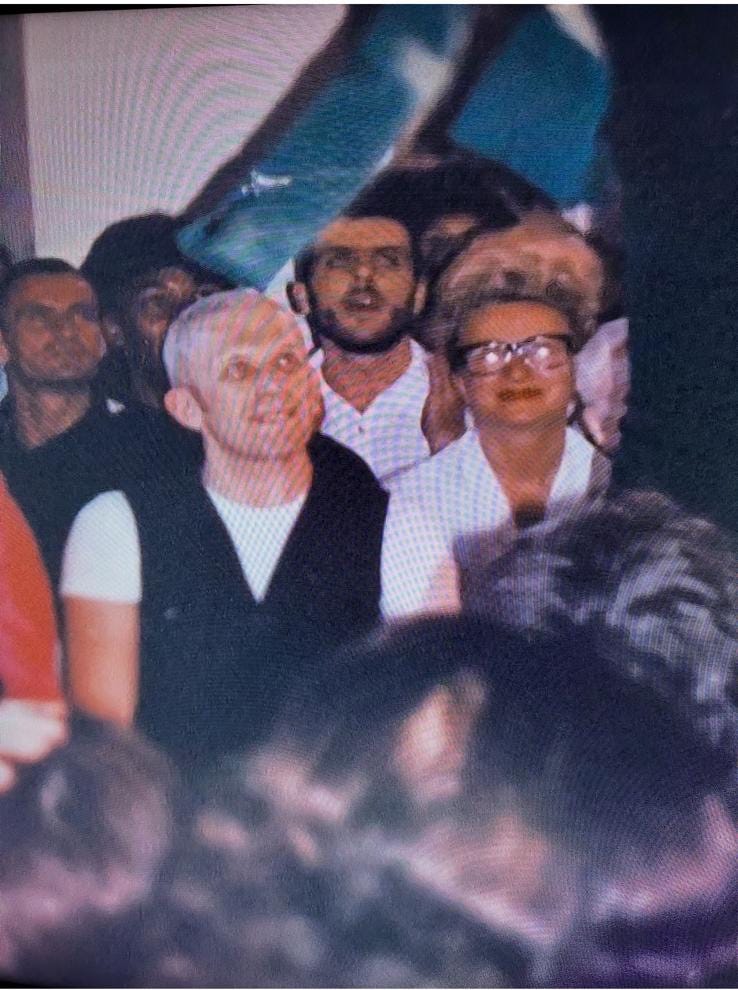
Eventually, that research led me to Myriam herself. What started as a question about a handbag became a journey into the career of a designer whose work had shaped decades of fashion history.
Our conversation for The Fashion Archivist Podcast became an opportunity to document not only the story of the handbag, but the career of the woman behind it. She generously opened her archive, shared for the first time publicly her memories and allowed me to experience a remarkable body of work that deserves far greater recognition.
The first thing Myriam said to me when I called her was:
“Freya, what do you want from me?”
A few weeks later, that conversation continued in her home.
The moment I walked through the door, she noticed the handbag I was carrying. Not long after she pointed out what was wrong with its proportions and explained how she would have designed it differently. It wasn’t criticism for criticism’s sake. It was instinct.
That is Myriam Schaefer.
She sees handbags differently. Construction, balance, proportion and function seem to reveal themselves to her immediately. She analyses a design almost effortlessly before explaining how she would solve it. Spending time with her, it became obvious that designing bags isn’t simply what she does. It is how she thinks.
As we moved through her archive, decades of fashion history unfolded. She showed me handbags from her own namesake label, each demonstrating an extraordinary level of craftsmanship. Having myself worked with vintage and archival fashion for years, I have handled countless designer bags. Yet I was struck by the precision of Schaefer’s work. The construction, the finishing and the attention to detail reflected a designer whose understanding of leather goods extends far beyond aesthetics.


Then came one of the moments I will never forget.
Myriam brought out the image of the vintage handbag that inspired what would eventually become the Balenciaga City Bag. Beside it sat the very first prototype she created.
Holding those two pieces together felt like holding a missing chapter of fashion history. A moment I will never forget.
She spoke about testing the design, refining its construction and working alongside Nicolas Ghesquière during her time at Balenciaga. Suddenly, one of the most recognisable handbags of the past twenty-five years was no longer an abstract fashion icon. It became a tangible design process shaped by experimentation, craftsmanship and creative dialogue.
She also showed me another Balenciaga design that never reached production, a one-of-a-kind prototype that exists only in her archive. Seeing these pieces was a reminder that fashion history is filled not only with visible designs but also with ideas that never reached the public yet reveal just as much about a designer’s creative vision.
Standing there, it struck me that archives do something extraordinary. They allow us to move beyond mythology. Fashion often remembers finished products, but archives preserve the process: the prototypes, the rejected ideas, the conversations, and the hands that shaped them. They remind us that history is rarely as simple as the stories we tell about it.
Originally called the Le Dix Motorcycle Lariat, designed by Myriam Schaefer at the request of Nicolas Ghesquière, the Balenciaga City Bag challenged the known ideas of luxury. With its soft construction, distressed leather, oversized studs and relaxed silhouette, it stood in stark contrast to the rigidly structured handbags dominating the market at the time.
As most of the ‘It’ bags of that time were so different, the Balenciaga headquarters decided not to go ahead with production for fear that the motorcycle-inspired Lariat would be a commercial failure. Figuring it would have been such a waste, Nicholas decided to go ahead with the prototype pieces for Balenciaga’s runway show to complement the looks. The rest is history.
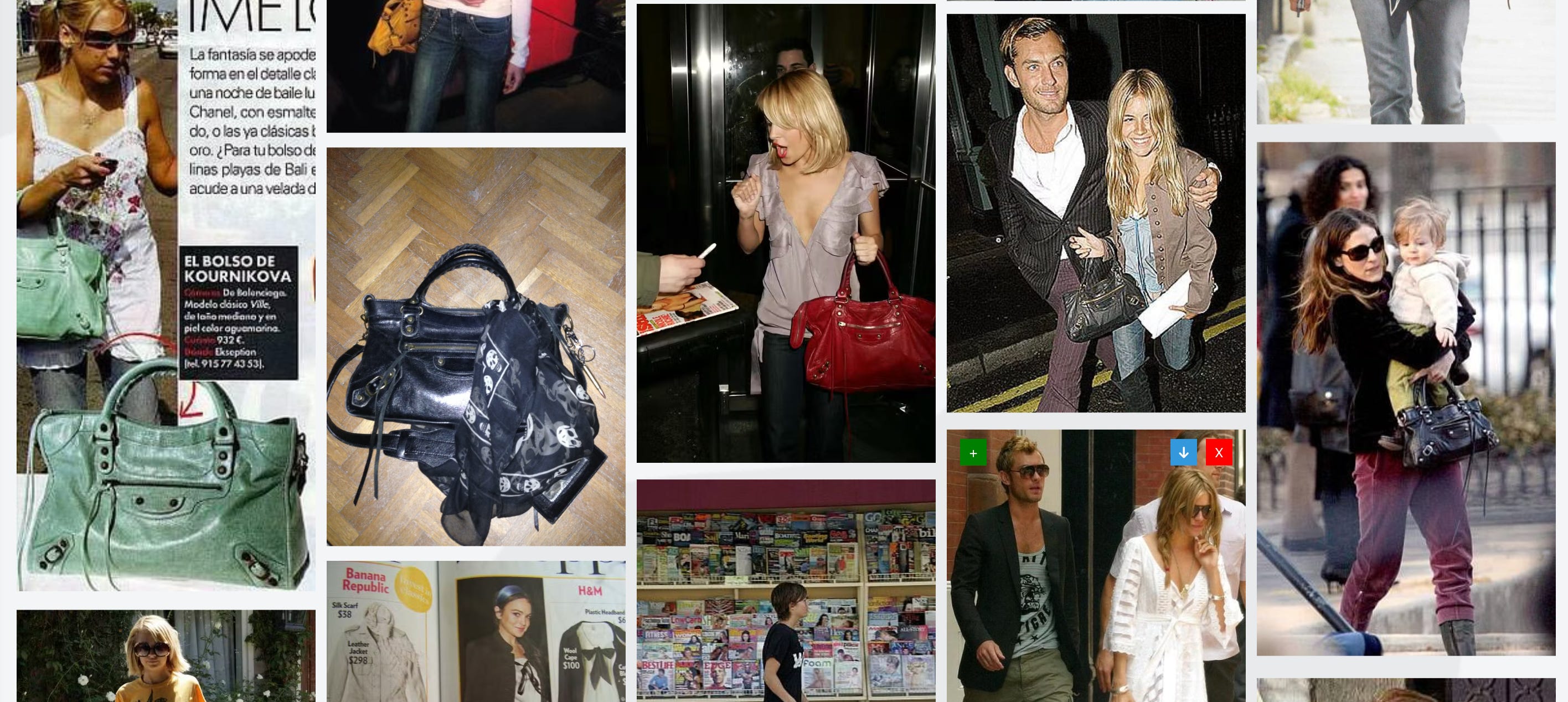
Carried by Kate Moss, Sienna Miller, Chloë Sevigny, Nicole Richie, Lindsay Lohan and countless others, the City Bag became inseparable from the rise of early-2000s paparazzi culture. Those candid photographs with women leaving airports, walking through city streets or carrying coffee on an ordinary afternoon, created a new visual language for fashion. Unlike traditional advertising campaigns, these images felt authentic. The City Bag wasn’t simply marketed. It became part of everyday life, helping define an entire era of celebrity style.
Its influence extended far beyond the decade that made it famous. It became one of the most copied luxury handbags of its generation, a phenomenon I witnessed firsthand through my work in vintage and archival fashion. Counterfeiters rarely copy forgotten designs. They copy what people desire.
Today, more than twenty years later, the City Bag has entered renewed interest. Revived under Demna and embraced by a new generation drawn to Y2K fashion, it has once again become one of the most sought-after bags on the resale market.

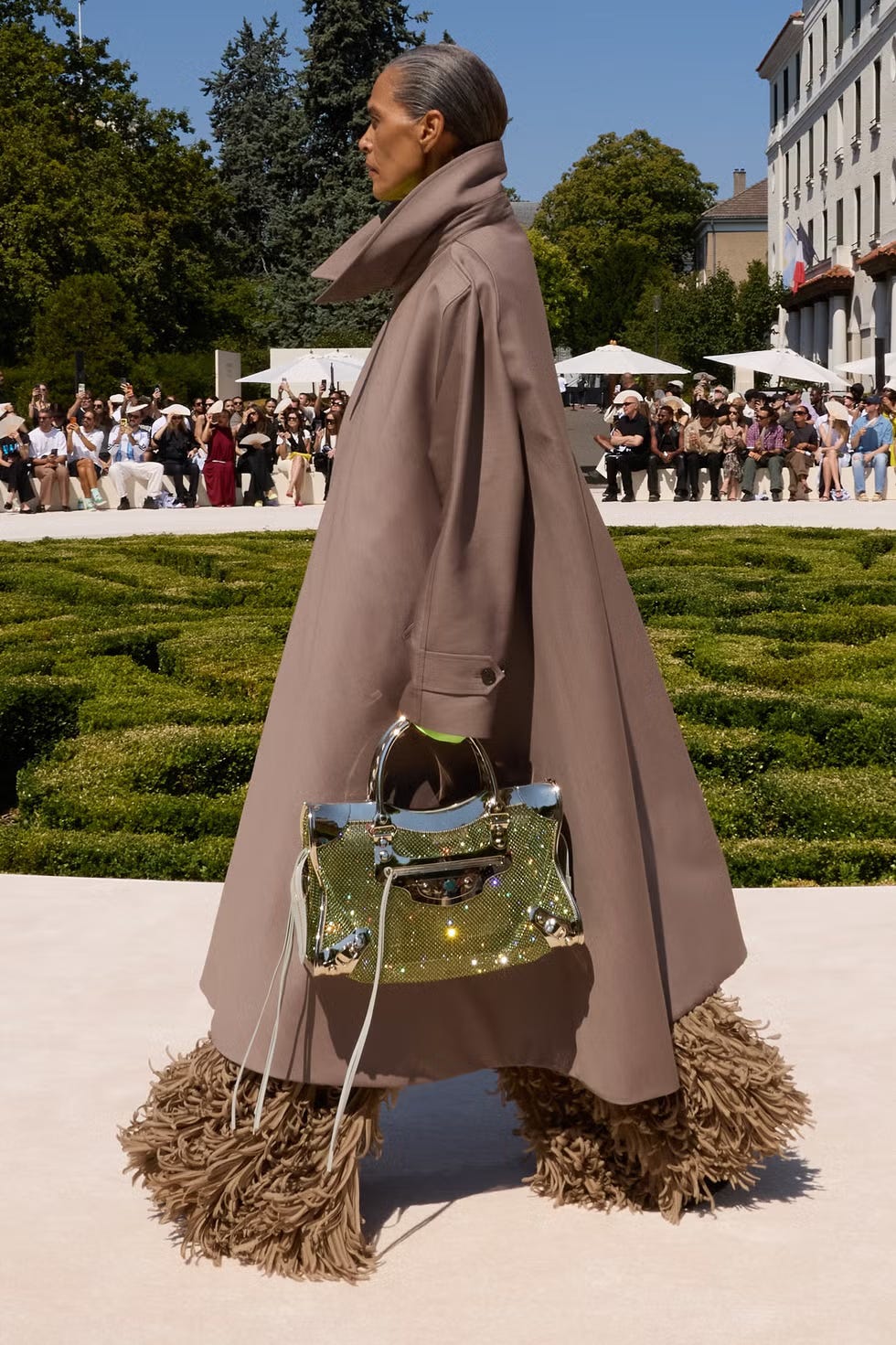
Yet while the handbag became instantly recognisable around the world, the name of the woman who designed it quietly disappeared from much of the conversation.
Throughout my research, I repeatedly encountered Nicolas Ghesquière’s name. His contribution to Balenciaga is, of course, significant. But finding Myriam Schaefer’s role required genuine research.
That raised a much larger question: Who decides who gets remembered?
It is a question that sits at the heart of archival fashion.
When we preserve garments, photographs and accessories, we are also preserving narratives. Those narratives are rarely neutral. Over time, fashion history often becomes simplified. Creative processes involving many people become attributed to a select few. Certain names are repeated until they become inseparable from the object itself, while others gradually disappear.
This is not simply a story about one handbag.
It is a story about authorship.
About ownership.
And, perhaps most importantly,
about female authorship.
Like art, music, architecture and design, fashion history has often celebrated singular creative figures while overlooking the women whose ideas, technical knowledge and creative labour shaped the work itself. Recovering those histories is not about diminishing anyone else’s contribution. It is about making the historical record more complete.
During our conversation, Myriam spoke thoughtfully about supporting other women, creative confidence and the importance of recognising those whose work has too often remained behind the scenes. Her reflections extended far beyond the City Bag. They offered a broader perspective on what it means to build a creative career and how easily those careers can fade from public memory if nobody takes the time to document them.
That, perhaps, is the true responsibility of archival fashion. Not simply to preserve objects. But to preserve authorship.
When I left Myriam’s archive, I kept thinking about something remarkably simple.
Millions of people can recognise the silhouette of the Balenciaga City Bag. Far fewer can name the woman who designed it.
That imbalance says as much about the way we write fashion history as it does about the handbag itself.
Myriam Schaefer’s contribution deserves to be part of fashion history, not as a footnote, but as an integral part of it. Her work belongs in books, lectures, exhibitions and conversations about modern fashion design.
Because iconic designs deserve for their designers to be remembered by name.
This article would not have been possible without Myriam Schaefer’s generosity in sharing her memories, archive and personal photographs. Fashion history is richest when the people who lived it are given the opportunity to tell their own stories.